Quick Answer
Question: Why do behavior charts stop working for kids with ADHD and autism?
Answer: Behavior charts fail for ADHD/autism children because the novelty wears off (dopamine stops responding after 1-2 weeks), end-of-day consequences feel disconnected from the actual behavior moments, and repeated 'failures' trigger shame that causes defensive shutdown. Switch to immediate, brief feedback and connection-based approaches instead of delayed rewards and consequences.
The Moment You're In
The teacher hands you the crumpled behavior chart at pickup. Three red sad faces. Again. Your son stands behind her with his arms crossed, jaw set, refusing to look at you. "He told me he's just going to rip it up when he gets home," she says. "We're running out of ideas."
You pull into the driveway and just sit there, engine running, tears sliding down your cheeks. He's not even five yet. How is it already this hard? How did the chart that worked so well three weeks ago become something he threatens to destroy?
You're not failing. And you're definitely not alone.
Why This Happens
If that scene—or some version of it—is your daily reality, I need you to know something: You are not failing. Your child is not broken. And what you're experiencing is far more common than the silence around it suggests.
A parent recently shared this exact struggle with their almost-five-year-old son, diagnosed with ADHD combined type and Level 1 ASD. Despite being described as "high functioning, friendly, smart, and well spoken," their child was struggling significantly at school. The behavior chart that once worked had lost its power. The disrespect was growing. The personal space issues weren't improving.
The Novelty Factor Wears Off
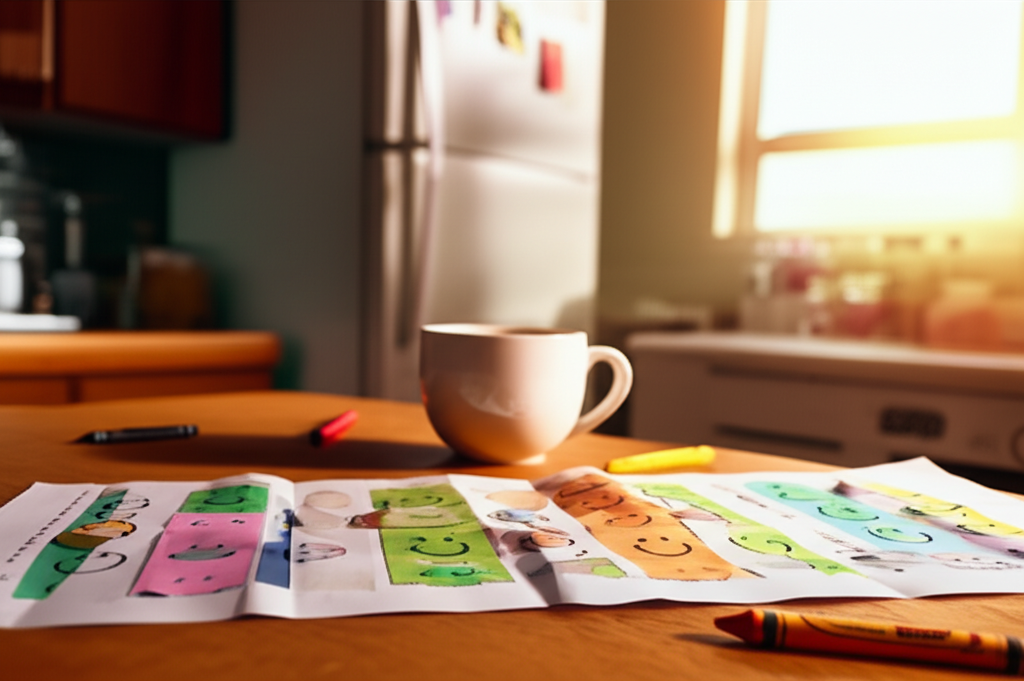
Children with ADHD are wired to seek novelty. That exciting new chart with colorful faces? It triggers dopamine initially. But once the brain adapts (often within 1-2 weeks), the reward simply doesn't register the same way anymore. This is why rewards and consequences only work "for about a week."
Delayed Consequences Don't Connect
For a child with ADHD, especially at age 4-5, the end-of-day review of behavior feels completely disconnected from the actual moments when struggles occurred. Their brains literally cannot bridge that time gap effectively. When the teacher reviews the chart at day's end, your child isn't reliving those moments—they're just experiencing criticism in the present.
The Shame Spiral
When a child says "I don't care" and threatens to rip up the chart, they're not being defiant for the sake of it. This is often a protective response to overwhelming shame. Children who repeatedly receive "red sad faces" begin to internalize that they ARE bad, rather than understanding they MADE a choice that didn't work out. The defensive posture—folding arms, turning away, fingers in ears—these are signs of a nervous system in protection mode.
The "High-Functioning" Trap
Because this child presents as intelligent, verbal, and friendly, he falls through the cracks of support systems. The school district said their programs "wouldn't be appropriate" because he's doing so well on paper.
But here's the truth: being smart doesn't mean a child has the neurological capacity for self-regulation. Being verbal doesn't mean they can process and implement social expectations in real-time. Being friendly doesn't mean they understand the nuances of personal space and boundaries.
Sensory and Regulation Needs
The behaviors described—constant touching of peers and belongings, loudness, difficulty with personal space—often point to underlying sensory seeking needs. This child may be touching others because his proprioceptive system is literally hungry for input. He may be loud because he needs more auditory and oral sensory feedback. These aren't choices; they're needs expressing themselves in socially inappropriate ways.
What Actually Helps
1. Move from Consequence-Based to Connection-Based Approaches
Instead of end-of-day reviews that trigger shame, try:
- Frequent brief check-ins: A quick thumbs up, a gentle hand on the shoulder, a whispered "great job waiting your turn" provides immediate feedback that the ADHD brain can actually process.
- Private signals: Work with the teacher to establish a secret signal that redirects without public attention.
- Repair over punishment: When things go wrong, focus on "How can we fix this?" rather than "You got a red face."
2. Address the Underlying Sensory Needs
Work with an occupational therapist to identify sensory supports such as:
- Movement breaks built into the schedule before dysregulation occurs
- Fidget tools that provide proprioceptive input
- A "heavy work" job like carrying books or pushing chairs that feeds the sensory system
- Defined personal space using visual markers like a carpet square or tape boundaries
3. Reframe "Disrespect" as Dysregulation
When a child folds their arms, turns their back, or covers their ears during redirection, they're communicating that their nervous system is overwhelmed. This isn't disrespect—it's distress.
Try coaching teachers to:
- Lower their voice and get on the child's level
- Reduce words during correction (overwhelmed brains can't process lectures)
- Offer a brief regulation break before addressing the behavior
- Use visual supports instead of verbal reminders when possible
4. Rethink the Reward System Entirely
Instead of sticker charts that lose potency:
- Rotate rewards frequently to maintain novelty (weekly changes at minimum)
- Use immediate, small rewards rather than earning toward something big
- Focus on effort, not outcomes: "I noticed how hard you tried to give your friend space" matters more than a perfect day
- Consider intrinsic motivation: "How did it feel when you used gentle hands?" builds internal awareness
5. Build Skills, Not Just Compliance
Your child needs explicit teaching of skills that neurotypical children often absorb naturally:
- Practice personal space with games at home (hula hoop boundaries, "arm's length" practice)
- Role-play scenarios where he practices responses to redirection
- Use social stories specific to his classroom situations
- Teach emotional vocabulary so he can express frustration verbally instead of behaviorally
The Path Forward: ABA and School Advocacy
The decision to bring in a BCBA for assessment is a positive step. Here's how to make the most of it:
Questions to Ask the BCBA
- How will you identify the function of each challenging behavior?
- What does naturalistic ABA look like in a classroom setting?
- How will you collaborate with the classroom teacher?
- What's your approach to building skills versus just reducing behaviors?
Advocating for School Support
Even though the school district said their programs weren't appropriate, you may still have options:
- Request a formal evaluation in writing (this triggers legal timelines)
- Ask specifically about a 504 plan, which provides accommodations without special education placement
- Document everything—every incident, every communication
- Consider whether this school environment is truly the right fit, or if accommodations could make it work
Frequently Asked Questions
What works instead of behavior charts for ADHD and autism?
Use immediate, brief check-ins (quick thumbs up, whispered praise), private redirection signals with teachers, and rotate small rewards weekly to maintain novelty. Focus on connection and skill-building rather than consequences—address underlying sensory needs with movement breaks and fidget tools.
Why does my ADHD child say "I don't care" about consequences?
When children say "I don't care" and become defensive (arms crossed, covering ears), they're not being defiant—they're protecting themselves from overwhelming shame. Repeated negative feedback causes them to internalize that they ARE bad, triggering their nervous system into protection mode. This is distress, not disrespect.
Why does my autistic child keep touching other kids and invading personal space?
Constant touching often signals unmet sensory needs—the proprioceptive system is literally hungry for input. These aren't behavioral choices but needs expressing themselves inappropriately. Address this with "heavy work" activities (carrying books, pushing chairs), movement breaks, and explicit personal space practice using visual markers like hula hoops.
The Bigger Picture
To the parent who wrote "I'm just so broken"—please hear this: Your child's struggles are not a reflection of your parenting. The fact that you're seeking help, researching solutions, and refusing to give up shows incredible love and dedication.
Children like your son often look back as adults and recognize that their "difficult" years were actually years of learning to navigate a world not built for their brains. With the right support, understanding, and strategies, these children grow into creative, passionate, innovative adults who see the world differently—and that's a gift.
The two steps forward and three steps back? That's not failure. That's the nonlinear path of development for neurodiverse children. The progress IS happening, even when it doesn't feel like it.
Your child is not giving you a hard time. Your child is having a hard time. And together, you'll find what works.
Your Next Steps
- Take a breath. This is hard, and you're allowed to feel broken sometimes.
- Prepare for your BCBA assessment with specific examples and questions.
- Open a conversation with the teacher about shifting from consequence-based to connection-based approaches.
- Consider requesting a formal evaluation from your school district in writing.
- Connect with other parents who understand—communities like autism parenting groups can be lifelines.
If you're navigating this right now, you don't have to figure it out alone. AriaStar is here 24/7 - no judgment, just support from someone who gets it.
Want more support? Explore our blog or talk to AriaStar.