Quick Answer
Question: How do you potty train a non-verbal autistic child?
Answer: Use schedule-based training instead of waiting for cues your child can't give. Track accident times for a week to find patterns, then build bathroom visits around that schedule. Make the bathroom less overwhelming with a padded seat, footstool, and sensory accommodations, and reward small steps like sitting calmly—not just successful elimination.
The Moment You're In
You're watching for signs—any signs. A pause in play. A hand on the diaper. A look toward the bathroom. But there's nothing. The only signal comes after: the squirming, the tugging at clothes, the desperate attempt to escape the wet diaper. And when you try the potty? It's a battle that leaves you both exhausted.
You're not doing this wrong. You're facing one of the most challenging combinations in autism parenting: toilet training without words.
Why This Happens
For neurotypical children, potty training relies heavily on communication. They feel the urge, they tell you (or show you), you guide them to the toilet, success happens, and the connection builds. The feedback loop is verbal and immediate.
For a non-verbal child, that entire system doesn't exist—at least not in the traditional way.
Your child may not yet have interoceptive awareness—the ability to recognize internal body signals like a full bladder. This isn't a choice or a delay they'll just "grow out of." Interoception is a sense, like sight or hearing, and for many autistic children, it develops on its own timeline or needs explicit support.
Then there's the sensory piece. The bathroom itself can be overwhelming: the echo of hard surfaces, the cold toilet seat, the vulnerability of the position, the startling sound of a flush. What looks like defiance might actually be genuine sensory distress.
And the physical resistance? When a child can't say "I'm not ready" or "this scares me" or "I don't understand what you want," their body says it for them.
What Actually Helps
1. Shift from Cue-Based to Schedule-Based Training
Since your child isn't giving you signals, create the signals externally. Track when accidents happen for a week—you'll likely find a pattern (after meals, after waking, every 2 hours). Then build bathroom visits around that schedule, not around waiting for cues that aren't coming.
Use a visual timer they can see counting down to bathroom time. This removes you as the "bad guy" and makes the routine predictable.
2. Make the Bathroom Less Hostile
Before focusing on success, focus on tolerance. Can your child sit on the toilet (clothed, lid down) for 5 seconds without distress? Start there.
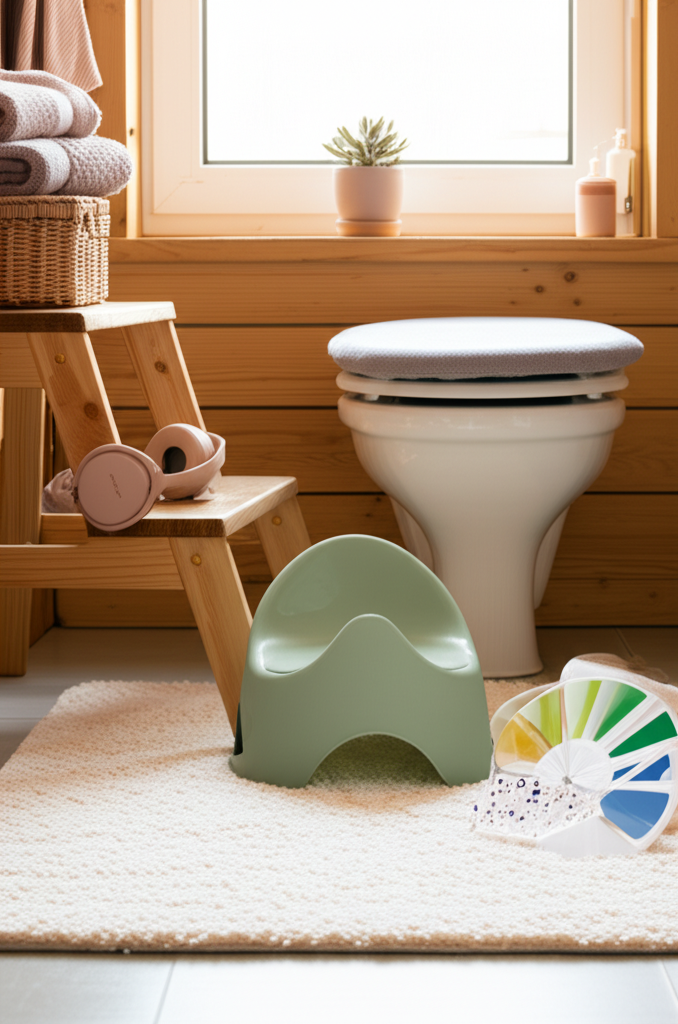
- Try a padded seat that's warmer and more secure
- Add a footstool so their feet aren't dangling (this also helps with the physical mechanics of elimination)
- Let them wear headphones if sound is an issue
- Keep the fan off if the noise bothers them
- Some children do better with a small potty in a familiar room first
3. Create a Communication Bridge
Your child may not have words, but they can learn to communicate about this. Consider:
- A single picture symbol for "toilet" they can hand you or point to
- A button they can press that says "bathroom"
- A consistent sign or gesture you both use
This isn't about waiting until they're "ready to talk." It's about giving them ANY way to participate in the process. Even if you're initiating every bathroom trip, giving them a way to signal "yes" or "no" or "done" returns some control to them.
4. Reward the Process, Not Just the Product
If you only celebrate when pee lands in the potty, you might wait a very long time for a win. Instead, reward:
- Walking to the bathroom without resistance
- Sitting for 10 seconds (then 20, then 30)
- Letting you remove the diaper near the toilet
- Staying calm during the routine
Small, immediate rewards work better than big delayed ones. A single chocolate chip, 30 seconds of a favorite video, a specific praise phrase—whatever genuinely motivates your child.
5. Use the After-Signal as a Starting Point
You mentioned your child tries to remove the diaper after going. This IS awareness—just delayed awareness. You can build on this:
- When you notice the removal attempt, calmly narrate: "You went. Diaper is wet. Let's go to the bathroom." Then do the diaper change IN the bathroom, near the toilet.
- Over time, this builds the association: elimination → bathroom → clean and dry.
You're not behind. You're building the connection from where your child actually is.
Frequently Asked Questions
How do you potty train an autistic child with no readiness signs?
Skip waiting for readiness cues and create external signals instead. Track when accidents happen for a week to identify patterns, then use a visual timer to make bathroom visits predictable. Reward process steps like walking to the bathroom calmly or sitting briefly, not just successful elimination.
Why does my autistic child fight the potty?
Resistance often signals sensory distress, not defiance. The bathroom can be overwhelming—cold seats, echoing sounds, dangling feet, and the startling flush. Your child may also lack interoceptive awareness (the ability to sense a full bladder), making the whole process confusing rather than intuitive.
How long does it take to potty train a non-verbal autistic child?
The timeline is typically months, sometimes more than a year—not weeks. This reflects the genuine complexity of coordinating brain and body signals without language, not your parenting or your child's intelligence. Focus on the smallest possible next step and repeat until solid before moving forward.
The Bigger Picture
Here's what no one tells you about potty training a non-verbal autistic child: the timeline isn't weeks. It's often months. Sometimes more than a year. And that's okay.
This isn't a reflection of your parenting or your child's intelligence. It's a reflection of the genuine complexity of what you're asking their brain and body to coordinate—without the tool most humans rely on most (language) to bridge the gap.
The parents who get through this aren't the ones who push harder. They're the ones who find the smallest possible next step and repeat it until it's solid. Then they find the next one.
Your child is learning, even when it doesn't look like it. Every calm bathroom visit that doesn't end in success is still teaching them: this place is safe, this routine is predictable, and you're patient enough to wait for them.
That patience is everything.
If you're navigating this right now, you don't have to figure it out alone. AriaStar is here 24/7—no judgment, just support from someone who gets it.
Want more support? Explore our blog or talk to AriaStar.