How Do You Teach Concepts to an Autistic Child at Home?
Quick Answer
Question: How can I teach my autistic child basic concepts like object recognition and letters when they shut down during therapy?
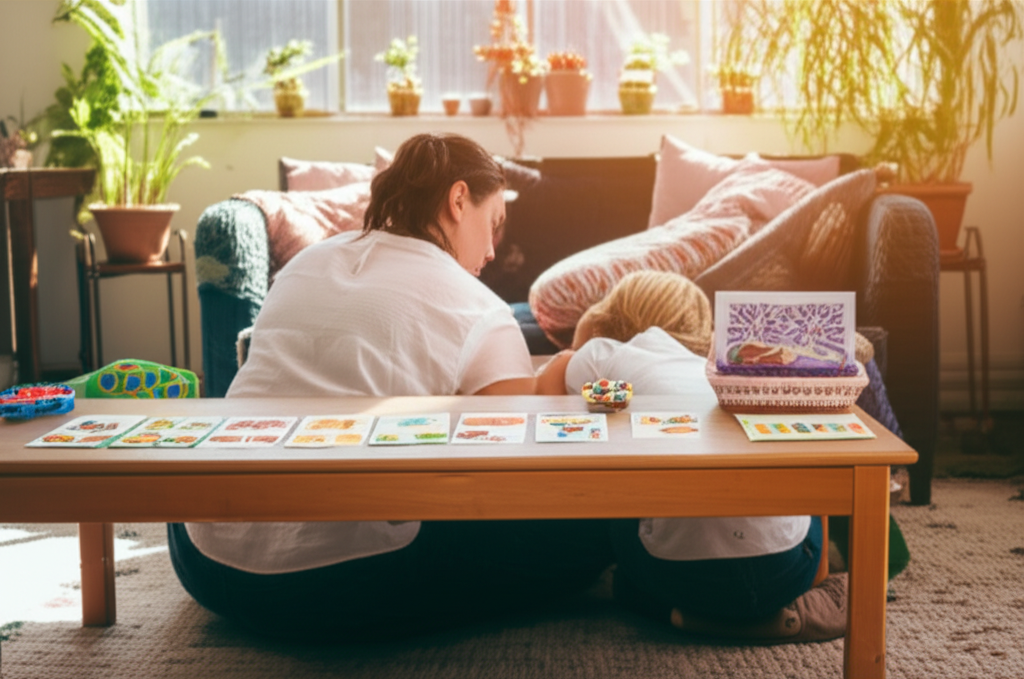
Answer: Many autistic children learn better at home where they feel safe and can work at their own pace. Use visual tools with real images, keep sessions short (2-5 minutes), follow your child's interests, and build on what they already notice in daily routines. Progress often comes faster when learning happens without the pressure of a clinical setting.
The Moment You're In
Your child sits frozen in the therapy room, eyes down, refusing to engage. But at home, they point to the bananas on the counter. They light up when you show them pictures on your phone. They want to learn—just not like this.
You're not failing. And you're definitely not alone.
Why This Happens
Therapy environments can be overwhelming for autistic children in ways that aren't always obvious. The fluorescent lights, unfamiliar smells, new people, unpredictable schedules—all of it taxes their nervous system before learning even begins. When a child is in survival mode, the parts of the brain needed for learning new concepts go offline.
At home, your child's nervous system can relax. They know the sounds, the smells, the people. They can predict what comes next. This safety isn't a luxury—it's the foundation that makes learning possible.
If your child has experienced skill regression—losing words or abilities they once had—rebuilding those skills requires even more safety and patience. Regression often happens during periods of neurological reorganization or stress. The skills aren't gone forever; they're just temporarily inaccessible. A calm, familiar environment helps your child's brain reconnect to what it already knows.
What Actually Helps
Start with what they already notice. If your child gravitates toward certain objects—maybe they always grab the same cup or stare at the ceiling fan—use those as your starting point. Learning sticks when it connects to existing interests. Name the things they're already drawn to before introducing new ones.
Use real images, not cartoon drawings. Many autistic children struggle to generalize from stylized images to real objects. A cartoon apple doesn't look like the apple in your kitchen. Use photographs of actual objects, ideally ones that look like what's in your home. This builds recognition that transfers to daily life.
Keep it impossibly short. Two minutes of engaged learning beats twenty minutes of shutdown. If your child learns one new object today, that's a win. End sessions before they want to stop—this builds positive associations with learning time and makes them more likely to engage tomorrow.
Follow their pace, not a curriculum. Your child might learn 10 fruits in a week, then need a month to add 5 more. They might master letters out of order or skip some entirely at first. This isn't failure—it's how their brain organizes information. Trust the process even when it looks different from what you expected.
Build learning into routines, not "sessions." Name objects while unloading groceries. Point out letters on cereal boxes. Count stairs as you climb them. When learning happens inside daily life, it doesn't feel like work—and the repetition of routines provides natural practice.
Frequently Asked Questions
Why does my autistic child learn better at home than in therapy?
Home provides sensory predictability, emotional safety, and the presence of trusted people—all of which reduce nervous system stress and free up cognitive resources for learning. Therapy settings, even good ones, require children to manage unfamiliar environments while also trying to learn, which can overwhelm their capacity.
When should I be worried about my autistic child losing skills they already had?
Skill regression is common in autism, especially between ages 1-3, and can also happen during illness, major transitions, or periods of stress. If regression is sudden, severe, or accompanied by other concerning symptoms, consult your pediatrician. But gradual fluctuation in skills—where abilities come and go—is often part of autistic development rather than a sign of permanent loss.
How do I teach my nonverbal autistic child to recognize objects?
Start with 3-5 highly motivating objects your child already interacts with daily. Use real photographs and pair the image with the actual object. Say the word clearly and simply ("ball") without extra language. Practice in short bursts throughout the day, and celebrate any recognition—pointing, looking, reaching—not just verbal responses.
The Bigger Picture
The therapy room isn't the only place learning happens. For many autistic children, it's not even the best place. When you teach your child at home, you're not replacing professional support—you're providing something professionals can't: the safety of your presence, the predictability of your routines, and the patience that comes from knowing your child deeply.
Fifty objects. Fifteen letters. These might look like small numbers on paper. But if you've watched your child go from not recognizing an apple to pointing at one in a book, you know: this is everything. This is their brain building bridges. And you helped build them.
Progress doesn't always look like the charts in therapy offices. Sometimes it looks like a quiet moment at the kitchen table, your child finally touching the picture of a banana, and you realizing—they're learning. Right here. With you.
If you're navigating this right now, you don't have to figure it out alone. AriaStar is here 24/7—no judgment, just support from someone who gets it.
Want more support? Explore our blog or talk to AriaStar.