Quick Answer
Question: What are the best gifts for autistic children?
Answer: The best gifts for autistic children follow their specific interests and sensory preferences rather than age labels. Ask parents about the child's sensory profile, lean into their deep interests (like dinosaurs or trains), and consider practical items like noise-canceling headphones or weighted blankets. A gift they'll actually use beats an 'age-appropriate' one gathering dust.
The Moment You're In
You're standing in a store (or scrolling endlessly online), wanting to find the perfect gift for an autistic child in your life. Maybe it's your nephew, your friend's daughter, or a classmate of your own child. You want to get something meaningful—not just another toy that ends up ignored in a corner.
Your thoughtfulness already matters more than you know. And with a little guidance, you can find something that truly lights them up.
Why This Matters
Autistic children experience the world differently—and that's not a limitation to work around, it's information that helps you choose better. Many autistic kids have specific sensory preferences, communication styles, and interests that run beautifully deep.
A gift that "works" isn't necessarily the most educational or expensive option. It's one that meets the child where they are. For a child who's working on communication, that might mean something that naturally invites interaction. For a sensory-seeker, it might be something with satisfying textures or movement. For a child with intense interests, it might be anything connected to their favorite topic—even if it seems "too simple" or "too advanced" for their age.
The best gifts say: I see you. I thought about YOU specifically.
What Actually Helps
1. Follow the child's lead, not the age on the box
Developmental toys are wonderful, but "age-appropriate" labels don't always apply. A 5-year-old who loves cause-and-effect toys isn't "behind"—they're showing you exactly what engages their brain. Trust that. A toy they'll actually use beats an "advanced" one gathering dust.
2. Consider sensory profiles
If you're not sure about the child's sensory preferences, ask their parent—they'll appreciate that you thought to check. Some kids love squishy textures, weighted items, or things that spin. Others are overwhelmed by noise, lights, or strong smells. When in doubt, look for toys with volume controls, soft textures, and no overwhelming surprises.
3. Communication-supporting gifts can be gold
For children working on speech or using AAC (augmentative and alternative communication), gifts that encourage any form of communication are powerful. Think: simple matching games, books with repetitive phrases, toys that involve turn-taking, or even picture card sets that match their interests. These aren't "therapy tools"—they're play that naturally builds connection.
4. Deep interests are a gift-giving cheat code
If the child loves dinosaurs, trains, or a specific TV character, lean IN. A dinosaur puzzle, train-themed bedding, or a book about their favorite show tells them their passions are valid and worth celebrating. This isn't "giving in" to restricted interests—it's honoring who they are.
5. When in doubt: experiences, consumables, or practical support
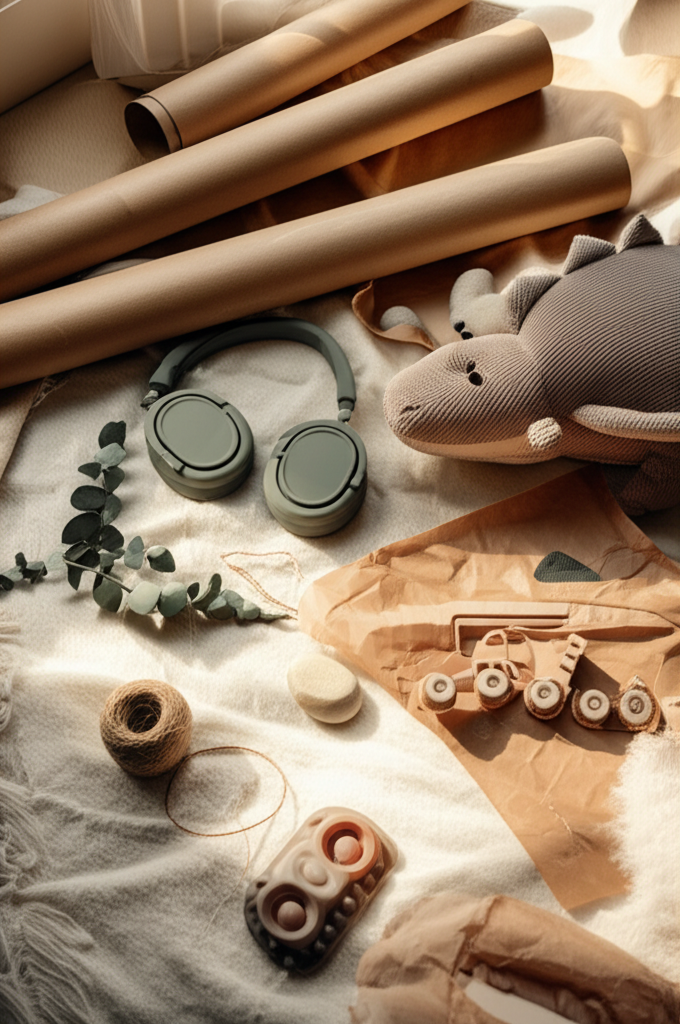
Not sure about toys? A membership to a sensory-friendly museum, a gift card to a preferred store, or even practical items like noise-canceling headphones or a cozy weighted blanket can be incredibly meaningful. Some families appreciate gifts that support the whole household—a meal delivery gift card or an offer to babysit can be the most valuable gift of all.
Frequently Asked Questions
Should I buy age-appropriate toys for an autistic child?
Not necessarily. Developmental labels don't always apply to autistic children. A 5-year-old who loves cause-and-effect toys isn't "behind"—they're showing you what engages their brain. Trust the child's lead and choose toys they'll actually enjoy using.
What sensory toys are good for autistic kids?
It depends on the child's sensory profile—ask their parent first. Some kids love squishy textures, weighted items, or things that spin, while others are overwhelmed by noise or lights. When in doubt, choose toys with volume controls, soft textures, and no overwhelming surprises.
What gifts help autistic children with communication?
Gifts that encourage any form of communication are powerful for children working on speech or using AAC. Consider simple matching games, books with repetitive phrases, turn-taking toys, or picture card sets matching their interests. These aren't therapy tools—they're play that naturally builds connection.
A Note for Parents: Share This With Your Circle
If you're an autism parent reading this, you might be thinking about the well-meaning relatives who keep buying gifts your child can't use, or the friends who want to help but don't know how. Consider sharing this post—or having a simple conversation before gift-giving occasions.
You're not being picky or difficult. You're helping people love your child better.
The Bigger Picture
The fact that you're reading this—that you want to give a gift that actually helps—already makes you the kind of person autism families need in their corner. Perfect gifts matter less than you think. What matters is that a child feels seen, and that their family feels supported.
Sometimes the best gift isn't something you buy at all. It's showing up consistently, learning about their world, and letting them know they're not alone.
If you're navigating this right now, you don't have to figure it out alone. AriaStar is here 24/7—no judgment, just support from someone who gets it.
Want more support? Explore our blog or talk to AriaStar.