Quick Answer
Question: How do I get a break as a single parent of a high-needs autistic child?
Answer: Create a completely safe "yes space" in your home—a nearly empty room with soft flooring and sensory-safe toys where your child can be contained while you take brief breaks. Use video monitors to supervise from another room. Apply for respite care through Medicaid waivers, developmental disability services, or your local autism society—waitlists are long, so apply now even if you're unsure you qualify.
The Moment You're In
You start to brush your teeth and hear a crash. You try to use the bathroom and tiny fingers appear under the door—or worse, silence. You haven't showered without a child in the room since you can't remember when. Every cabinet is locked. Every sharp object is hidden. And still, somehow, there's marker on the wall again.
You're not failing. And you're definitely not alone.
Why This Happens
Some autistic children require what professionals call "line of sight supervision"—meaning they genuinely cannot be left unattended for even a minute. This isn't about behavior problems or parenting choices. It's about a child whose brain is wired to explore the world through their mouth, their hands, their whole body—constantly, intensely, without the internal pause button that develops in neurotypical children.
When your child mouths non-food items, tears paper compulsively, or moves through the house like a curious tornado, they're not being defiant. Their sensory system is seeking input, their impulse control is still developing (and may develop on a different timeline), and their understanding of safety doesn't match their physical capabilities. This is exhausting to manage—and it's even more exhausting when you're the only one managing it.
For single parents, there's no tag-team. No "your turn" at 3 AM. No one to watch the kids while you take a phone call. When your support system is small or nonexistent, when the other parent isn't in the picture, you're running a marathon every single day without a water station in sight. The isolation compounds the exhaustion, and the exhaustion deepens the isolation. You're not drowning because you're weak. You're drowning because no human being is designed to do this alone.
What Actually Helps
1. Create a "Yes Space" Within Your Home
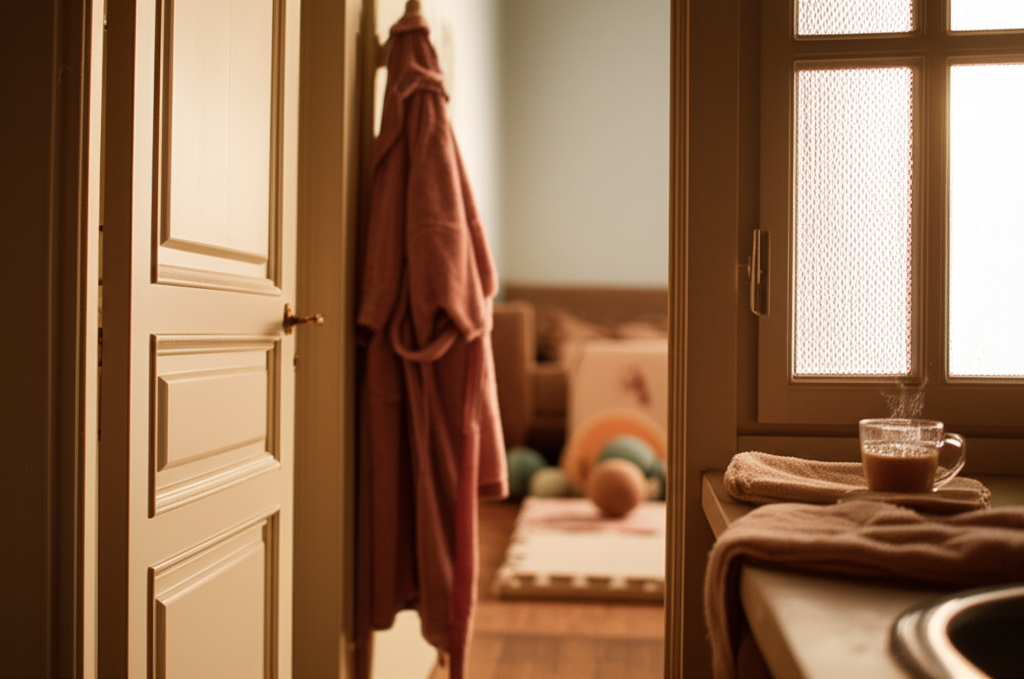
Rather than baby-proofing the entire house (exhausting and often impossible), designate one room or area as completely safe. Remove everything—and we mean everything—that could be mouthed, torn, or destroyed. This might mean a nearly empty room with a soft floor, some sensory-safe toys, and nothing else. When you need five minutes, this is where your child goes. It won't feel like enough space, but it's a contained space where you can breathe.
2. Embrace "Good Enough" Supervision Tools
A video baby monitor pointed at the yes space lets you use the bathroom with the door closed. A motion sensor alarm on their bedroom door alerts you to nighttime wandering. These aren't replacements for supervision—they're bridges that buy you minutes. Those minutes matter.
3. Pursue Respite Like Your Life Depends On It (Because It Does)
Many states offer respite care hours through Medicaid waivers, developmental disability services, or autism-specific programs. The waitlists can be long, so apply now even if you don't think you qualify. Contact your local autism society chapter. Ask your child's school about extended day programs. Call 211 and specifically ask about respite services for caregivers of children with disabilities. Getting help is not giving up—it's what allows you to keep going.
4. Lower the Bar on Everything Else
Paper plates are fine. Laundry can live in baskets. The kids can eat cereal for dinner. Your other children can learn that "mom needs five minutes" is sacred time. Right now, your only job is survival. Everything else is negotiable.
5. Find Your People (Even If It's Online at 2 AM)
The parents who understand this level of exhaustion are the ones living it. Online communities for autism parents, Facebook groups for single parents of special needs kids, even just one friend who gets it—these connections are oxygen. You don't need advice from people who've never lived this. You need witnesses. People who say "I see you, this is impossibly hard, and you're still here."
Frequently Asked Questions
What is line of sight supervision for autistic children?
Line of sight supervision means a child genuinely cannot be left unattended for even a minute due to safety concerns. This is common for autistic children whose sensory systems constantly seek input, whose impulse control develops on a different timeline, and whose understanding of safety doesn't match their physical capabilities. It's not about behavior problems—it's about how their brain is wired.
How do I find respite care for my autistic child?
Contact your state's Medicaid waiver program or developmental disability services, as many offer respite care hours. Reach out to your local autism society chapter, ask your child's school about extended day programs, and call 211 to specifically request respite services for caregivers of children with disabilities. Apply now even if waitlists are long or you're unsure you qualify.
How do I keep my autistic child safe when I can't watch them every second?
Create a designated "yes space"—one room stripped of everything that could be mouthed, torn, or destroyed, with soft flooring and sensory-safe toys only. Use a video baby monitor pointed at this space so you can use the bathroom or take brief breaks. Motion sensor alarms on bedroom doors can alert you to nighttime wandering.
The Bigger Picture
Here's what no one tells you: the fact that you're worried about your other kids, that you're thinking about solutions, that you're reaching out even when you're this depleted—that's not evidence of failure. That's evidence of a parent who is still fighting for their family despite having nothing left in the tank.
This level of need from your child will not last forever in exactly this form. Children grow. Skills develop. Support systems can be built, even when it feels impossible. And you are allowed—required, actually—to need help. The goal isn't to become superhuman. The goal is to survive long enough for things to shift, even slightly, in your favor.
You are doing something incredibly hard with insufficient resources. That's not a personal failing. That's a systemic one. And while you work within that broken system, please know: every cold cup of coffee, every interrupted shower, every time you've kept your child safe for one more day—that counts. That matters. You matter.
If you're navigating this right now, you don't have to figure it out alone. AriaStar is here 24/7—no judgment, just support from someone who gets it.
Want more support? Explore our blog or talk to AriaStar.