Quick Answer
Question: Why does my autistic child struggle to make friends?
Answer: Autistic children often want connection deeply but struggle with unwritten social rules—like how close to stand, when to stop joking, or how to join a game. When they use 'annoying' behaviors like being overly silly or physical, they're actually problem-solving: any reaction feels like connection. Help by validating their goal ('I see you wanted their attention'), practicing specific scripts, and finding structured activities with shared interests where socializing is more predictable.
The Moment You're In
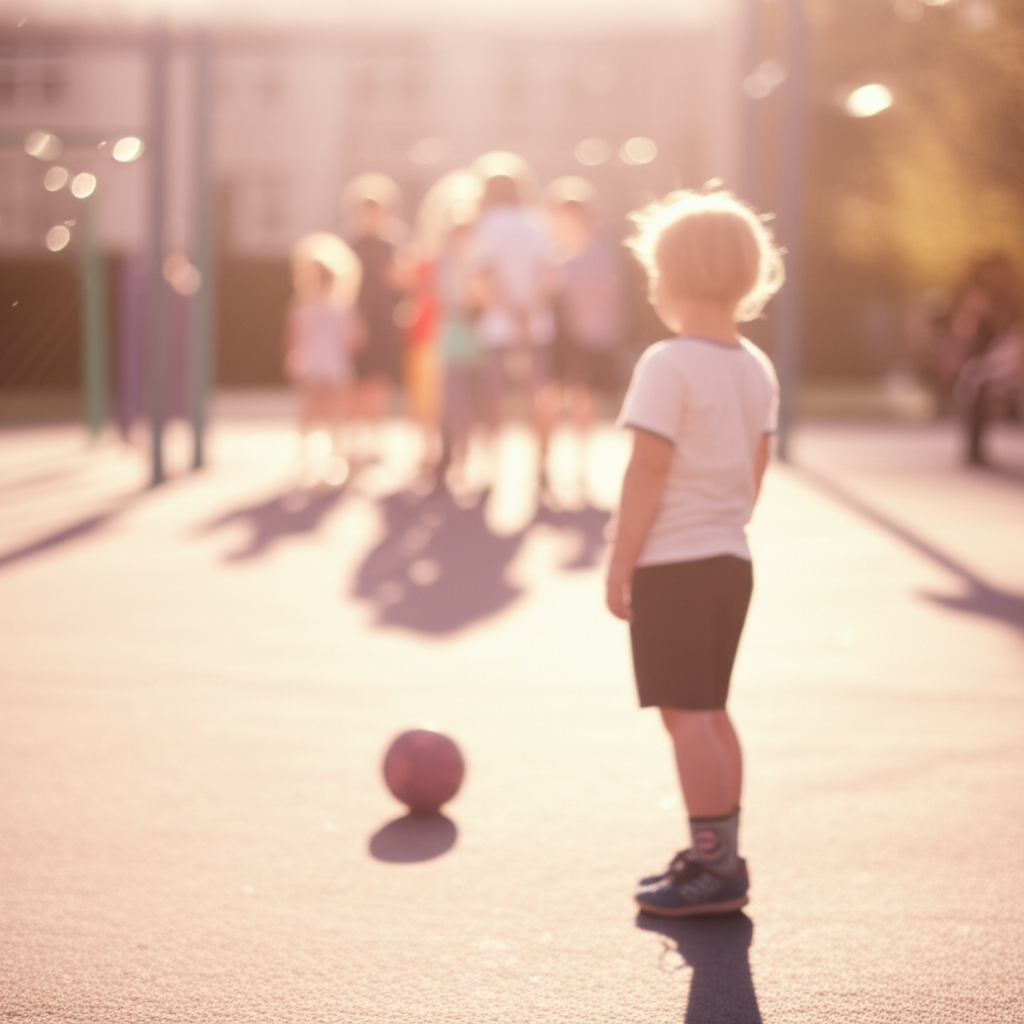
You watch him on the playground, bouncing up to a group of kids, doing something silly to get their attention. They roll their eyes. Walk away. And he stands there for a moment before trying again—louder this time, goofier, maybe grabbing someone's arm. You can see exactly what he's doing: he's trying to connect. But the harder he tries, the more they pull back.
You're not imagining how painful this is. And you're definitely not alone.
Why This Happens
Here's what's important to understand: your child isn't misbehaving. He's problem-solving.
Somewhere along the way, he learned that being funny or physical gets a reaction from people. And reaction feels like connection—even if it's negative. For kids who struggle to read social cues, any response can feel better than being invisible. So he doubles down on what "works," not realizing it's actually pushing peers further away.
This is incredibly common in autistic children, especially those who are academically capable and verbally fluent enough that adults expect them to "know better." But social skills aren't intuitive for everyone. For many autistic kids, the unwritten rules of friendship—how close to stand, when to stop joking, how to join a game already in progress—might as well be written in a language no one taught them.
The painful irony? These kids often want connection more than their neurotypical peers. They feel the loneliness acutely. They just don't have the roadmap everyone else seems to be born with.
What Actually Helps
1. Name the goal behind the behavior.
Instead of "Stop being so silly," try: "I can see you really wanted those kids to notice you. Let's figure out another way to get their attention." This validates his underlying need while opening the door to teaching alternatives.
2. Practice specific scripts and scenarios.
Social skills aren't learned through lectures—they're learned through rehearsal. Role-play common situations: "What could you say if you want to join a game at recess?" Practice until the words feel automatic. Many kids do well with literal scripts: "Can I play?" or "What are you building?"
3. Find the right environment for connection.
Structured activities with shared interests (think: LEGO club, coding class, Pokémon league) often work better than free-play environments like recess. When there's a built-in topic and clear rules, socializing becomes more predictable. And smaller groups mean less overwhelming social noise.
4. Consider targeted support.
Occupational therapy can help with physical boundaries and body awareness (the "handsy" piece). Social skills groups—especially those designed for autistic kids—provide a safe space to practice with peers who are learning the same things. Ask about pragmatic language therapy through your school or a speech-language pathologist.
5. Protect the friendships that ARE working.
You mentioned he has good friends in afterschool care—that's huge. Nurture those connections. Invite those kids for one-on-one playdates where he can shine without the chaos of group dynamics. Success builds confidence.
Frequently Asked Questions
Why does my autistic child act annoying to get attention from other kids?
Your child learned that being funny or physical gets a reaction, and any reaction feels like connection—even negative ones. For kids who struggle to read social cues, being noticed feels better than being invisible. They're not misbehaving; they're problem-solving with the tools they have.
How can I help my autistic child learn social skills for making friends?
Practice specific scripts through role-play until they feel automatic (like "Can I play?" or "What are you building?"). Find structured activities with shared interests like LEGO club or coding class, where there are built-in topics and clear rules. Social skills groups designed for autistic kids also provide safe practice with peers learning the same things.
What type of environment is best for autistic children to make friends?
Structured activities with shared interests work better than free-play environments like recess. When there's a built-in topic and clear rules, socializing becomes more predictable. Smaller groups also mean less overwhelming social noise, and one-on-one playdates let your child shine without chaotic group dynamics.
The Bigger Picture
Here's what I want you to hold onto: your child's desire for friendship is a strength. So many parents worry their autistic child doesn't want connection—yours clearly does. That motivation is the foundation everything else gets built on.
The skills will come. Maybe not on the same timeline as his peers, and maybe with more explicit teaching than other kids need. But they'll come. And in the meantime, the fact that he has you—someone who sees his loneliness, who's researching solutions, who's advocating for him—matters more than you know.
He's not broken. He's learning a language that doesn't come naturally to him. And with the right support, he'll find his people.
If you're navigating this right now, you don't have to figure it out alone. AriaStar is here 24/7—no judgment, just support from someone who gets it.
Want more support? Explore our blog or talk to AriaStar.